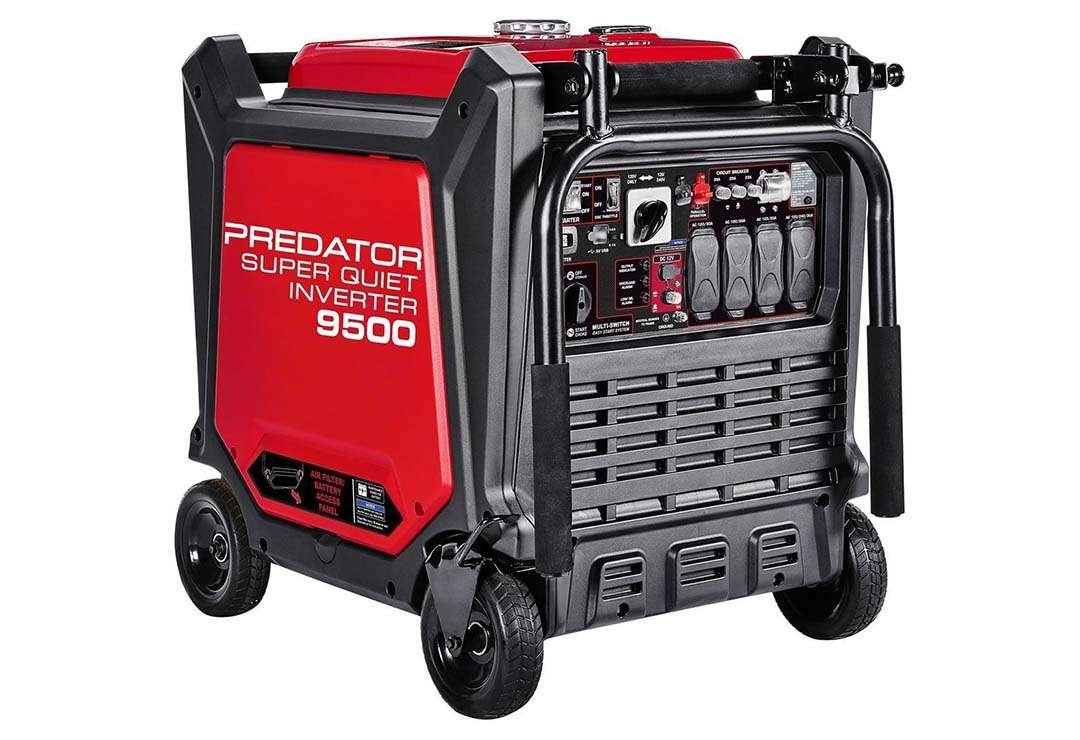
When the power goes out, or you're miles from an outlet, few things inspire confidence like a robust, reliable generator. Today, we're diving deep into the Predator 9500 Generator Reviews & Performance, exploring whether this popular inverter model truly lives up to its reputation for delivering substantial power without breaking the bank or your eardrums. If you've been weighing your options for backup power, an RV trip, or a job site, understanding the nuances of the Predator 9500 is crucial.
This isn't just about raw watts; it's about the clean energy, the portability (or lack thereof, depending on who you ask), and the overall value proposition that makes or breaks a generator in the real world.
At a Glance: The Predator 9500 Inverter Generator
- Power Output: Generous 9500 starting watts, 7600 running watts. Some reports might reference 9500 running watts, but 7600 is the more common sustained output.
- Engine: Robust 420cc OHV 4-stroke engine.
- Clean Power: Inverter technology ensures <3% Total Harmonic Distortion (THD), making it safe for all sensitive electronics.
- Portability: Weighs around 120 pounds with wheels and a telescoping handle; designed for maneuverability, though some sources list a much heavier weight.
- Fuel Efficiency: 5.3-gallon tank (some state 6.6 gallons) offers up to 12 hours run time at half load (or 7.5 hours with a 6.6-gallon tank). Features an eco-mode.
- Noise Level: Rated around 58 dB at quarter load, increasing with demand. Considered quiet for its power class, especially in eco-mode.
- Outlets: Multiple 120V AC, a 120/240V 30A twist-lock, 12V DC, and a USB port.
- Safety Features: Low oil shutdown, overload protection, digital hour meter, LCD display.
- Ideal For: Home backup, RVs, camping, construction sites, event organizers.
The Powerhouse Within: Unpacking the Predator 9500's Core Specs
At the heart of the Predator 9500 Inverter Generator is a formidable 420cc OHV 4-stroke engine. This isn't a small engine designed for minimal tasks; it's built to deliver serious muscle. You're looking at a generator capable of churning out 9500 starting watts and a continuous 7600 running watts. This distinction is important: starting watts (or surge watts) provide a brief burst of extra power needed to kick-start appliances with motors, like refrigerators or air conditioners. The running watts are what it can sustain day in and day out.
While some literature might suggest 9500 running watts, the more widely accepted and reliable figure for continuous output on this model hovers around 7600 watts. This still places it firmly in the "heavy-duty" category for inverter generators, capable of powering a substantial portion of your home or multiple high-demand tools on a job site. For context, you can typically run a full-size refrigerator, a microwave, several lights, a TV, and still have headroom for other electronics.
What makes the Predator 9500 stand out in its class, particularly at its price point, is its inverter technology. Unlike older, conventional generators that produce raw, "dirty" power, inverter generators convert raw AC power to DC, then back to clean AC power. This results in incredibly stable power with less than 3% Total Harmonic Distortion (THD). Why does this matter? Simply put, it means the power is as clean, if not cleaner, than what comes out of your wall outlets. This makes it perfectly safe for sensitive electronics such as laptops, smartphones, medical devices, and modern flat-screen TVs, which could be damaged by the fluctuating power of non-inverter models.
Understanding the advantages of inverter technology is key to appreciating the value of the Predator 9500. It's not just about producing electricity; it's about producing quality electricity that protects your investments.
Beyond the Numbers: Real-World Performance & What to Expect
When you fire up the Predator 9500, what kind of experience can you expect? For many users, it’s a revelation, especially if they’re coming from a traditional, open-frame generator. The clean power output means you don’t have to worry about frying your expensive electronics during a power outage or while enjoying the great outdoors. This is a significant peace of mind factor that often gets overlooked in initial comparisons.
The 7600 running watts truly unlock a wide range of applications. For emergency home backup, it can handle critical circuits, running essentials like your furnace fan, sump pump, refrigerator, and lights without strain. On a construction site, it can power multiple saws, drills, and compressors simultaneously. RVers find it more than adequate for air conditioning units (even 15,000 BTU models), microwaves, and all interior electronics, transforming their mobile living space into a true home away from home.
The generator also features an eco-mode, which is more than just a marketing gimmick. When engaged, the engine speed automatically adjusts to the electrical load. If you're only running a few lights and charging your phone, the engine will slow down, consuming less fuel and significantly reducing noise. When a heavy load, like an air conditioner, kicks in, the engine revs up to meet demand. This dynamic adjustment is key to both fuel efficiency and noise management, dramatically extending runtime on a single tank.
The Weight of Power: Design, Portability & Maneuverability
"Portable" is a relative term in the world of generators, especially when you start pushing into higher wattage. The Predator 9500 has dimensions of roughly 24.5 x 21.5 x 22 inches, which is quite compact for its power output. However, its weight is where some confusion can arise.
Most reliable sources and user experiences indicate the Predator 9500 weighs approximately 120 pounds. This is a manageable weight for two people to lift and move, or for one person to maneuver over flat ground thanks to its integrated mobility kit. However, some reports cite a weight of 216 pounds. This discrepancy is significant. A weight of 216 pounds would make it considerably less "portable" and require much more effort to move. It’s possible the 216-pound figure refers to shipping weight with packaging, or is a misprint related to a different, non-inverter model. For practical purposes, when discussing its day-to-day usability, we’re generally referring to the 120-pound operational weight.
To aid in that portability, the Predator 9500 comes well-equipped. It boasts a durable metal frame that not only protects the internal components but also features vibration-reducing mounts. These mounts help minimize the rattling and shaking that can contribute to overall noise and wear. Crucially, it includes built-in wheels and a telescoping handle. The handle retracts neatly when not in use, making storage easier, but extends out to provide leverage for wheeling the unit around like luggage. While 120 pounds is still a substantial amount of weight, these design choices make it far more manageable than trying to carry a similar capacity generator.
Considering factors like weight and size is critical when you're thinking about how to choose the right generator for your needs. Will you be moving it frequently, or will it mostly stay in one place?
Fueling Your Needs: Tank Size, Efficiency & Runtime Realities
The Predator 9500 operates on readily available gasoline, which is convenient. The fuel tank capacity is another point where you might find slightly varying information. Most reports indicate a 5.3-gallon fuel tank, while some mention a 6.6-gallon capacity. For our primary discussion, we'll focus on the more commonly reported 5.3-gallon tank.
With a 5.3-gallon tank, the Predator 9500 is capable of running for approximately 12 hours at half load. Half load for this unit would be around 3800 running watts, which is a very respectable duration, especially during an extended power outage or a long weekend camping trip. If you were working with the higher 6.6-gallon tank capacity, some data suggests a runtime of around 7.5 hours at half load. This particular discrepancy (larger tank, shorter runtime) might indicate different testing conditions or a different model variant, or perhaps assumes a higher base load for the "half load" calculation. For maximum efficiency, rely on the 5.3-gallon, 12-hour figure when operating under typical conditions with the eco-mode engaged.
The eco-mode isn't just about noise; it's a game-changer for fuel efficiency. By only using as much engine power as necessary, it significantly reduces gasoline consumption compared to generators that constantly run at full throttle. This means fewer trips to refill the tank and lower operating costs over time. In a world where fuel prices fluctuate, this feature provides a tangible benefit, stretching your dollars further.
For those planning extended trips or critical backup scenarios, having a clear understanding of your generator's fuel consumption is as important as the power it provides. It's a key factor in assessing securing your home with emergency backup power effectively.
Keeping the Peace: Predator 9500's Noise Profile
Noise is often a primary concern for anyone considering a generator, especially for recreational use or residential backup. The Predator 9500 is designed to be relatively quiet for its power class. It's rated at approximately 58 decibels at a quarter load. To put that in perspective, 58 dB is comparable to a normal conversation, a quiet office, or a running dishwasher. This is a significant achievement for a generator of this output, making it far less intrusive than older, open-frame models.
Of course, like any engine, the noise level will increase as the load on the generator goes up. At higher loads, the engine has to work harder, generating more sound. Some reports indicate noise levels around 68 decibels. This would be comparable to a vacuum cleaner or a busy street. The key is understanding that the eco-mode plays a crucial role in maintaining lower noise levels. When running at a lighter load, the engine idles down, dramatically reducing the noise footprint.
While the Predator 9500 performs exceptionally well within its class, it's not the absolute quietest generator on the market. Premium brands, such as the Honda EU7000iS, can achieve noise levels as low as 52 decibels. However, those premium options often come with a significantly higher price tag. The Predator 9500 strikes an excellent balance, offering a substantial amount of power with noise levels that are highly tolerable for most users, particularly when operating efficiently with eco-mode. It's quiet enough to run during the day at a campsite without annoying your neighbors or to power your home during an outage without being a constant disturbance.
Connecting Your World: Outlets, Features & Safety First
A generator is only as useful as its outlets and the features that protect your devices and the unit itself. The Predator 9500 comes with a well-thought-out control panel designed for versatility and safety.
You'll find a range of connectivity options:
- Two 120V AC Outlets (20A): Standard household outlets, perfect for general electronics, tools, and smaller appliances.
- One 120/240V 30A Twist-Lock Outlet: This is a crucial addition for heavier appliances, connecting to an RV's electrical system, or tying into a home transfer switch. This outlet provides the flexibility needed for whole-house backup or powering larger equipment.
- One 12V DC Outlet: Ideal for charging automotive batteries or running 12V DC accessories.
- A USB Port: A convenient touch for directly charging smartphones, tablets, or other small USB-powered devices without needing an additional adapter.
Beyond the outlets, the control panel integrates several intelligent features: - LCD Display: This digital screen provides real-time monitoring of key operational data, including wattage output (so you know how much power you're drawing), fuel levels, and other diagnostics. This allows you to manage your power consumption effectively and anticipate refueling needs.
- Digital Hour Meter: Essential for tracking maintenance intervals. Knowing precisely how many hours your generator has run helps you adhere to recommended oil changes, air filter cleaning, and spark plug inspections, extending the life of your unit.
- Low Oil Shutdown: A critical safety mechanism that automatically turns off the engine if the oil level drops below a safe threshold. This prevents severe engine damage that can occur when an engine runs without adequate lubrication.
- Overload Protection: This feature safeguards your connected devices by automatically shutting down the generator if the electrical load exceeds its capacity. It prevents potential damage to both the generator and your appliances from an overload situation.
These features, taken together, provide a user-friendly and secure experience, whether you're powering a power solution for your RV adventures or just keeping the lights on at home.
Living with the 9500: Maintenance, Longevity & Value Proposition
No matter how powerful a generator is, its true value often comes down to ease of ownership, maintenance, and overall longevity. The Predator 9500 is designed with user-friendliness in mind when it comes to routine care.
Maintenance: Tasks like oil changes, air filter cleaning, and spark plug inspection are straightforward and can be performed by most users with basic mechanical skills. The digital hour meter is invaluable here, prompting you when it's time for these crucial services. Regular maintenance is the single most important factor in ensuring your generator remains reliable for years to come. Thankfully, affordable replacement parts are readily available, and the generator comes with detailed user manuals that walk you through each step. Proper care, like following essential generator maintenance tips, directly translates into a longer lifespan for your investment.
Value Proposition: The Predator 9500 generally falls into a mid-range price category for inverter generators. This is a crucial point because it offers competitive power output, impressive noise control, and clean energy production that rivals much more expensive premium brands. You get a lot of bang for your buck, making it an attractive option for a wide array of users:
- Homeowners: Seeking reliable backup power during outages without needing to power every single item, but more than just the basics.
- Construction Professionals: Requiring substantial, clean power for tools on job sites where grid power isn't available.
- RVers and Campers: Looking for a powerful yet reasonably quiet unit to run their entire RV, including air conditioning, far from hookups.
- Event Organizers: Needing dependable power for lighting, sound systems, and other equipment at outdoor events.
The decision to purchase often involves balancing the power output you need, the fuel efficiency you desire, and the portability requirements against the unit's weight and noise levels. The Predator 9500 consistently hits a sweet spot for many, delivering a blend of strong performance, clean power, and reasonable noise reduction at a price point that offers excellent value. For a deeper dive into all its features and how it stacks up, check out Your guide to Predator Generator 9500.
The Verdict: Is the Predator 9500 Right for You?
So, after dissecting its components and performance, who is the Predator 9500 Inverter Generator truly for?
It's an excellent choice if you:
- Need significant power: 7600 running watts is enough for most large RVs, emergency home circuits, or multiple heavy-duty tools.
- Demand clean power: The inverter technology makes it safe for all your sensitive electronics.
- Value quiet operation (for its class): While not silent, its 58 dB rating at quarter load is impressive for a generator of this size, especially with eco-mode.
- Prioritize value: It offers a compelling blend of features and power that often costs significantly more in premium brands.
- Require some portability: Despite its weight, the built-in wheels and handle make it manageable for moving over suitable terrain.
- Are comfortable with basic maintenance: Its straightforward design makes routine care easy for the average user.
It might be overkill if you only need minimal power for very small tasks, or too much if you absolutely require the lightest, smallest generator possible for backpacking. But for serious power needs where quality and relative quiet are key, the Predator 9500 consistently emerges as a strong contender.
Making the Smart Choice: What to Consider Before You Buy
Before you commit to any generator, including the Predator 9500, take a moment to assess your specific needs and situation.
- Map Your Power Needs: Create a list of all the appliances and tools you plan to run simultaneously. Note their starting (surge) watts and running (continuous) watts. This will confirm if the 9500 starting watts and 7600 running watts are sufficient for your heaviest demands.
- Consider Your Environment: If you're using it in a residential area or a campsite, the noise level will be a significant factor. While the 9500 is good for its class, understand its limits at higher loads.
- Logistics of Movement: Realistically evaluate how often and how far you'll need to move the 120-pound unit. While wheeled, it's still heavy. Do you have ramps for loading into a truck, or will you need assistance?
- Fuel Storage: Plan for safe storage of gasoline. Remember, a 5.3-gallon tank will need refilling, and having extra fuel on hand is smart, but requires proper containers and storage practices.
- Accessories: Factor in any necessary accessories like a generator cover, extension cords (heavy-duty, appropriate gauge for your loads), or a transfer switch for home backup.
Common Questions About the Predator 9500
Q: Can the Predator 9500 power a whole house?
A: It can power critical circuits for most average-sized homes during an outage, such as refrigerators, freezers, lights, a furnace fan, and possibly a well pump or window AC unit. It's unlikely to power a very large central air conditioner along with all appliances simultaneously, but it provides substantial backup.
Q: Is the Predator 9500 fuel-efficient?
A: Yes, especially with its eco-mode engaged. By adjusting engine speed to the load, it optimizes fuel consumption, providing up to 12 hours of runtime at half load on a 5.3-gallon tank.
Q: Is it safe for sensitive electronics?
A: Absolutely. Its inverter technology produces clean power with less than 3% THD, making it perfectly safe for laptops, smartphones, TVs, and medical equipment.
Q: How does its noise compare to other generators?
A: At 58 decibels at quarter load, it's significantly quieter than conventional generators of similar output and competitive with many inverter generators in its class. While premium models might be slightly quieter, they often come at a much higher price.
Q: What kind of oil does the Predator 9500 use?
A: Typically, generators like the Predator 9500 require SAE 10W-30 motor oil for general use. Always consult your specific user manual for the exact recommended oil type and capacity, especially considering operating temperatures.
Q: Does it have a remote start feature?
A: Many Predator 9500 models include a remote start key fob, allowing you to start and stop the generator from a distance, which is a convenient feature for RVers or during inclement weather.
Your Next Steps for Reliable Power
The Predator 9500 Inverter Generator presents a compelling package of power, clean energy, and relative quietness for its class. It’s a workhorse designed for those who need reliable electricity without the usual compromises of generator ownership.
If your power needs align with its impressive output, and its balance of portability and noise control meets your expectations, the Predator 9500 stands as a robust and sensible investment. Take the time to evaluate your personal requirements, then consider this powerful unit as a serious contender for keeping your lights on, your tools running, and your adventures fully powered.