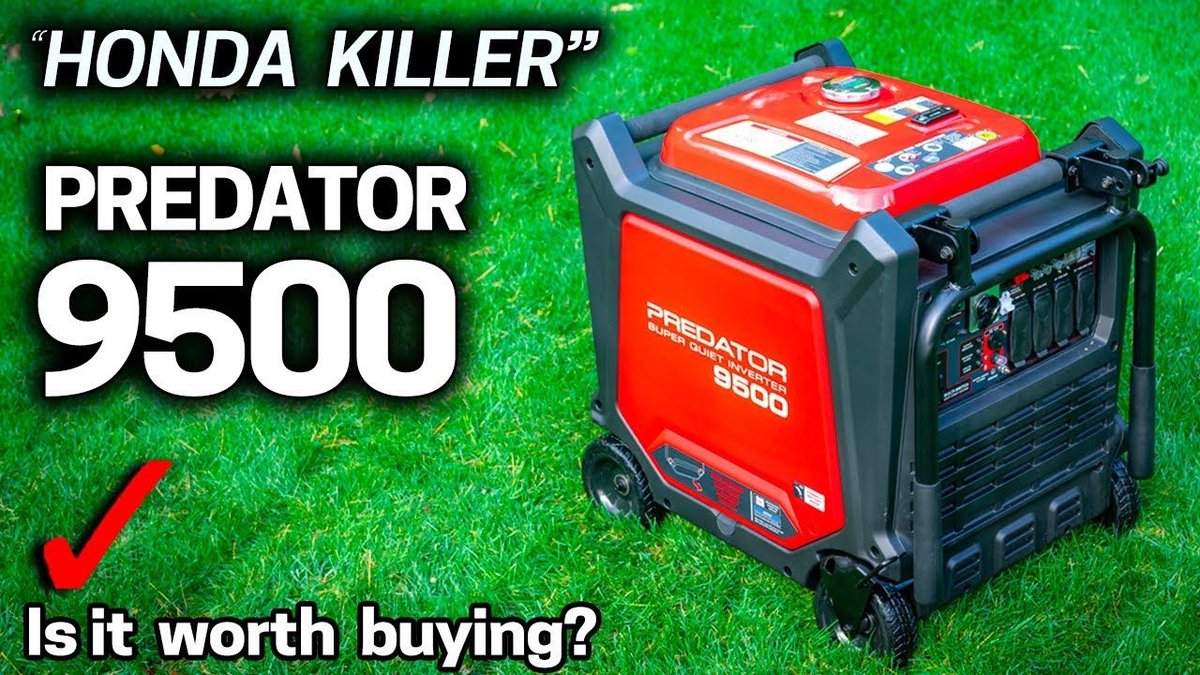
Predator 9500 Generator Specifications and Technical Data Overview: Your Guide to Serious Portable Power
When the grid goes dark, the job site demands robust, clean power, or your RV trip needs to feel like home, understanding your power source is paramount. The Predator 9500 Inverter Generator isn't just another machine; it's a portable powerhouse that’s garnered significant attention for bridging the gap between budget utility and premium performance. But beyond the hype, what truly lies under its hood? This deep dive into the Predator 9500 Generator's specifications and technical data will arm you with the knowledge to appreciate its capabilities, operate it confidently, and maintain it for years of reliable service.
We're going beyond just the numbers, exploring what these specs mean for you—whether you're a homeowner preparing for emergencies, a contractor powering sensitive tools, or an RVer enjoying the great outdoors.
At a Glance: Predator 9500 Key Takeaways
- Serious Power: Delivers 9500 starting watts and a robust 7600 running watts, capable of handling most home essentials, job site tools, and RV amenities.
- Clean & Stable: Advanced inverter technology produces less than 3% Total Harmonic Distortion (THD), making it safe for all sensitive electronics.
- Fuel Efficient: Variable speed engine adjusts to demand, saving up to 40% fuel compared to conventional generators. Expect up to 12 hours runtime at 25% load on a 6.6-gallon tank.
- Surprisingly Quiet: Operates at a conversational 67-68 dB at 25% load, making it suitable for noise-sensitive environments.
- Feature-Rich: Includes electric start, parallel capability, multiple outlet types (including 50A!), low oil shutdown, and overload protection.
- Robust Build: Weighs 194 pounds, offering durability but requiring two people or a good wheel kit for easy maneuvering.
- Exceptional Value: Offers performance comparable to generators twice its price, making professional-grade power accessible.
The Heart of the Beast: Engine and Power Output Explained
At the core of the Predator 9500's impressive capabilities is a robust 459cc OHV 4-stroke gas engine. This isn't just any engine; it's designed for efficiency and longevity, delivering serious power precisely when you need it.
Let's talk numbers that matter:
- Starting Watts: 9500W. This is the maximum surge power available for a brief moment, critical for kick-starting motor-driven appliances like refrigerators, air conditioners, or power tools that demand extra juice to get going. Think of it as the generator's "burst capacity."
- Running Watts: 7600W. This is the continuous power the generator can reliably supply. This figure is your everyday workhorse capacity, allowing you to run multiple appliances and tools simultaneously without interruption.
What does 7600 running watts really mean? It means you can comfortably power a significant portion of your home during an outage, run several high-draw tools on a construction site, or keep all the comforts of home humming in your large RV. The variable speed engine is a key player here; it doesn't constantly run at full throttle. Instead, it adjusts its RPMs to match the load, dramatically reducing fuel consumption and extending runtime.
Clean Power: Why Inverter Technology and Low THD Matter
One of the Predator 9500's standout features is its advanced inverter technology. Unlike traditional generators that produce raw, fluctuating AC power, inverter generators process the raw power through a sophisticated electronic rectifier and inverter circuit. The result is pure sine wave power.
- Less than 3% Total Harmonic Distortion (THD): This is a critical specification. THD measures the deviation of an alternating current (AC) waveform from a perfect sine wave. A lower THD means cleaner, more stable electricity. For context, household utility power typically has less than 5% THD. The Predator 9500's <3% THD rating means its power is as clean—or cleaner—than what comes out of your wall outlets.
Why is this important for you? Clean power is essential for sensitive electronics. Computers, smartphones, modern appliances with microprocessors, and medical equipment can be damaged or malfunction if fed power with high THD. With the Predator 9500, you can confidently plug in your laptop, charge your phone, or run medical devices without fear of damage. This clean output is one of the primary benefits of inverter technology that sets it apart from conventional generators.
Decibel Levels, Dimensions, and the Portability Question
Generators aren't typically known for their whisper-quiet operation, but inverter technology helps significantly.
- Noise Level: The Predator 9500 is rated at approximately 67 dB at 25% load. At 23 feet, this is roughly 68 dB. To put that in perspective, 60 dB is a normal conversation, and 70 dB is a vacuum cleaner. While not silent, 67 dB is considerably quieter than many conventional generators of similar output, making it much more neighbor-friendly and suitable for campgrounds or residential use. Running in ECO mode with lighter loads further reduces noise.
Now, for the "portable" part: - Weight: At 194 pounds, the Predator 9500 is substantial. While it comes with a wheel kit, this isn't a generator you'll be casually moving around by yourself. Plan for two people to load it into a truck or maneuver it over rough terrain. This is a common point of user feedback, with many opting for aftermarket pneumatic wheel upgrades to improve mobility on less-than-perfect surfaces.
- Dimensions:
- Core Unit: 26.3″ L x 20.5″ W x 22.4″ H
- With Frame/Wheel Kit: 35” L x 24” W x 27.5” H
These dimensions indicate a fairly compact footprint for its power output, but its weight always needs to be a consideration for storage and transport.
A Galaxy of Outlets: Connecting Your World
The Predator 9500 is designed with a comprehensive array of outlets, ensuring compatibility with a wide range of devices and applications. This flexibility is a key aspect of its technical design, allowing it to serve diverse power needs.
Here's the breakdown:
- Four 120V 20A GFCI Outlets (5-20R): These standard household outlets are Ground Fault Circuit Interrupter (GFCI) protected, providing an extra layer of safety, especially in damp or outdoor environments. Perfect for everyday appliances, lights, chargers, and most power tools.
- One 120V/240V 30A Twist-Lock Outlet (L14-30R): This heavy-duty outlet is commonly used for connecting to a transfer switch (for home backup power) or powering larger RVs. The twist-lock mechanism ensures a secure connection.
- One 120V/240V 50A Outlet (14-50R): This is a significant inclusion, allowing direct connection to large RVs with 50A service or certain home backup scenarios requiring high amperage 240V power. This outlet truly elevates the 9500's versatility.
- Two USB Ports (5V DC 2.1A): A convenient addition for directly charging smartphones, tablets, and other USB-powered devices without needing a separate adapter.
This robust selection of outlets means you're rarely left searching for the right connection, whether you're powering a construction site or enjoying off-grid living.
Beyond the Basics: Smart Features & Safety Protocols
Modern generators like the Predator 9500 don't just produce power; they come equipped with intelligent features designed for ease of use, safety, and operational efficiency.
- Electric Start with Recoil Backup: Starting your generator is made effortless with the press of a button. For added peace of mind, a traditional recoil (pull-start) mechanism is always there as a reliable backup.
- Parallel Capability: This is a game-changer. You can connect two Predator 9500 inverter generators together using a parallel kit (sold separately) to effectively double your power output. Imagine having up to 15,200 running watts! This feature provides incredible scalability, allowing you to expand your power capacity as your needs grow. If you're considering expanding your power options, understanding setting up generators in parallel is invaluable.
- Low Oil Shutdown: A crucial safety feature that automatically turns off the engine if the oil level drops too low. This prevents serious engine damage, protecting your investment.
- Overload Protection & Circuit Breakers: Integrated circuit breakers automatically trip if the generator is overloaded, preventing damage to the generator and connected devices.
- GFCI Protection: As mentioned with the 120V outlets, GFCI protection is standard, detecting ground faults and quickly shutting off power to prevent electrical shock.
- ECO Mode: This smart throttle feature automatically adjusts engine speed to match the load, significantly improving fuel efficiency and reducing noise when less power is needed.
These features contribute to a safer, more user-friendly, and ultimately more reliable power generation experience.
Real-World Power: What Can the Predator 9500 Run?
Understanding the raw specifications is one thing; seeing how they translate into practical applications is another. The Predator 9500's 7600 running watts open up a world of possibilities for diverse power needs.
Home Backup Power: Keeping Essentials On During Outages
During a power outage, the Predator 9500 can keep your critical home systems running.
- Refrigerators (700W) & Freezers (500W): Essential for food preservation.
- Furnace Fans (800W): Crucial for heat in colder climates (note: furnace ignition and control boards are low wattage).
- Sump Pumps (800W running) & Well Pumps (1000W running): Vital for flood prevention and water supply in homes without municipal water.
- Lights (400-800W): Keeping your home illuminated.
- Microwaves (1000W) & Coffee Makers (1000W): Comforts of home.
- TVs & Internet Equipment (200W): Stay connected and entertained.
- Window Air Conditioners or Portable Heaters (1500W): Maintain comfort in extreme weather.
- Computer Systems (300W): Work or stay productive.
Construction and Job Sites: Powering Productivity
For contractors, the clean and stable power is invaluable for both traditional and modern tools.
- Air Compressors (1500W running): For pneumatic tools.
- Circular Saws (1800W) & Table Saws (1800W running): Standard job site essentials.
- Battery Chargers (200-400W): Keeping cordless tools ready.
- Work Lights (600W): Illumination for early mornings or late evenings.
- Concrete Mixers (1000W running): For masonry work. The clean power is particularly beneficial for computerized tools, ensuring their sensitive electronics are protected.
RV and Camping: Comforts on the Road
For RV enthusiasts, the 9500W starting watts and 7600 running watts are a sweet spot for larger rigs.
- 15,000 BTU RV Air Conditioner (1500W running): Essential for hot climates.
- Electric Water Heater (1500W): Hot showers on demand.
- Induction Cooktop (1800W) & Microwave (1000W): Full kitchen capabilities.
- Lighting, Entertainment Systems, Electric Grills (1500W): All the amenities of home, off-grid.
Special Events and Mobile Businesses: Reliable On-Demand Power
The quiet operation and high output make it ideal for commercial applications.
- Commercial Refrigeration (1000W) & Cooking Equipment (2000-3000W): For food trucks or outdoor catering.
- PA Systems (500W) & Lighting (800W): For concerts, festivals, or outdoor events.
- Point-of-Sale Systems (200W): Keeping your business running anywhere.
This wide range of applications underscores the Predator 9500's versatility and why it's a popular choice for those needing substantial, reliable power.
Getting Started: Setup and Your First Fire-Up
While the Predator 9500 is a sophisticated machine, getting it ready for action is straightforward. Proper initial setup ensures safe and efficient operation from day one.
Initial Setup Essentials:
- Unbox and Inspect: Carefully remove the generator from its packaging. Check for any shipping damage or missing components.
- Add Engine Oil: The generator ships without oil. You'll need to add approximately 37.2 oz of 10W-30 engine oil. Locate the oil fill cap, use a funnel, and fill to the top of the dipstick without overfilling. Many users find an aftermarket extended funnel helpful to avoid a mess.
- Fuel Up: Fill the fuel tank with fresh, unleaded gasoline (87+ octane). Avoid old fuel or fuel with excessive ethanol, which can cause carburetor issues over time. The tank capacity is 6.6 gallons (for up to 12 hours runtime at 25% load) or 8.3 gallons (up to 12 hours at 50% load), depending on the specific model variation.
- Connect the Battery: For the electric start to work, you'll need to connect the included battery. Refer to your manual for the exact procedure, but typically it involves connecting the positive (red) and negative (black) terminals.
- Proper Grounding: For safety, always ground your generator. Connect a grounding wire from the generator's grounding lug to a grounding rod driven into the earth.
Starting Procedure (Electric Start):
- Placement: Always operate the generator outdoors in a well-ventilated area, away from windows, doors, and vents to prevent carbon monoxide buildup. Ensure it's on a level, stable surface.
- Checks: Double-check oil and fuel levels. Ensure all circuit breakers on the generator are in the "OFF" position before starting.
- Main Dial to "CHOKE": Locate the main control dial (often a rotary knob). Turn it to the "CHOKE" position.
- Press Start Button: Press and hold the electric start button for 2-3 seconds. The engine should crank and start.
- Gradual Transition to "RUN": Once the engine is running smoothly, slowly turn the main dial from "CHOKE" to the "RUN" position. The engine RPMs will stabilize.
- Engage ECO Mode (Optional): For lighter loads or to conserve fuel and reduce noise, you can then turn the dial to "ECO" mode. Disable ECO mode when powering large motor-driven appliances or if power demands are fluctuating significantly.
Mastering Operation: Tips for Efficiency & Longevity
Operating your Predator 9500 effectively goes beyond just starting it. Smart usage habits can significantly extend its lifespan, optimize fuel efficiency, and ensure consistent power delivery.
- Apply Loads Gradually: Once the generator is running, connect your devices one by one, starting with the largest power consumers first. This allows the generator to adjust to the load smoothly.
- Strategic ECO Mode Use: ECO mode is fantastic for fuel savings and noise reduction with smaller, stable loads (e.g., lights, charging phones). However, for appliances with high surge requirements (like air conditioners, pumps, or large power tools), disable ECO mode. The generator needs to run at full RPM to provide maximum power and react quickly to fluctuating demands.
- Balance 240V Loads: If you're utilizing the 240V outlets, try to balance the load across the two 120V legs if possible. This isn't always critical for inverter generators, but it's good practice for overall system health.
- Monitor Runtime and Refuel Safely: Plan for refueling. The generator can run for up to 12 hours at 25% load on a 6.6-gallon tank. Never refuel a hot generator; turn it off and allow it to cool for at least 15 minutes to prevent fire hazards.
- Choose the Right Extension Cords: For long runs or heavy loads, always use heavy-duty 10-gauge or 12-gauge extension cords. Thinner cords can cause significant voltage drop, leading to poor appliance performance and potential damage.
- Break-In Period: Many users report that the Predator 9500 benefits from a break-in period of 15-20 hours of light to moderate use before consistently applying maximum loads. This allows engine components to seat properly, ensuring peak performance and longevity.
Keeping It Running Smoothly: A Maintenance Roadmap
Just like a car, your generator needs regular care to perform optimally. Following a consistent maintenance schedule is non-negotiable for the Predator 9500's longevity and reliability. Always refer to your owner's manual for the most precise and up-to-date instructions.
General Maintenance Schedule Highlights:
- Before Each Use:
- Check engine oil level.
- Inspect air filter for dirt/debris.
- Check fuel level.
- Verify all covers and guards are secure.
- Ensure cooling air inlets are clear.
- After First 20 Hours (Crucial Break-In Maintenance):
- Change engine oil. This removes initial wear particles.
- Check/adjust valve clearance (typically a dealer/service center task).
- Inspect/clean spark arrestor.
- Every 50 Hours or 3 Months:
- Clean air filter (more often in dusty conditions).
- Change oil (if operating in dirty/dusty environments).
- Every 100 Hours or 6 Months:
- Change engine oil.
- Clean/replace air filter.
- Inspect/clean spark plug.
- Clean fuel sediment cup.
- Check/clean spark arrestor.
- Check/adjust valve clearance.
- Every 300 Hours or Annually:
- Replace spark plug.
- Replace air filter.
- Clean fuel tank/filter.
- Check fuel lines/connections.
- Inspect/clean cooling fins.
Key Maintenance How-Tos:
- Oil Change: Warm the generator briefly to thin the oil, then turn it off. Place a drain pan underneath, remove the oil fill cap, and then the drain plug. Allow all oil to drain. Reinstall the drain plug and refill with approximately 37.2 oz of fresh 10W-30 oil. The drain plug's placement can make this a messy job, so be prepared with rags.
- Air Filter: The foam element can be cleaned in warm, soapy water, rinsed, thoroughly dried, and then lightly coated with fresh engine oil before reinstallation. Paper elements should be tapped clean or replaced if excessively dirty.
- Battery Care: When removing the battery, disconnect the negative (black) cable first, then the positive (red). For installation, connect positive first, then negative. For storage over 30 days, disconnect the battery or use a trickle charger to maintain its charge and lifespan (typically 2-3 years).
- Long-Term Storage (>30 days): This is vital to prevent fuel system issues.
- Add a fuel stabilizer to the tank and run the generator for about 10 minutes to circulate the stabilized fuel.
- Turn off the fuel valve and let the engine run until it stalls from lack of fuel. This empties the carburetor.
- Change the engine oil.
- Remove the spark plug, pour about one tablespoon of engine oil into the cylinder, pull the starter rope slowly a few times to distribute the oil, then reinstall the spark plug. This "pickles" the cylinder to prevent rust.
- Clean the generator's exterior.
- Disconnect the battery or connect it to a trickle charger.
- Cover the generator with a breathable cover and store it in a clean, dry location.
Consistent adherence to these steps is fundamental for the generator's reliability and to avoid common issues. For more general advice on maintaining your power equipment, consider these essential generator maintenance tips.
When Things Go Sideways: Troubleshooting Common Snags
Even well-maintained generators can encounter issues. Knowing how to diagnose and address common problems can save you time and frustration.
- Starting Issues (Engine Won't Start or Cranks Slowly):
- Fuel: Check fuel level, ensure it's fresh (not stale), and that the fuel valve is open.
- Oil: Low oil shutdown is a common culprit. Check the oil level and add if needed.
- Spark Plug: A fouled, dirty, or damaged spark plug can prevent ignition. Inspect and clean/replace if necessary.
- Air Filter: A clogged air filter restricts airflow.
- Choke: Ensure the choke is in the correct position for starting (CHOKE, then RUN).
- Battery (Electric Start): A depleted battery (common after 2-3 years), loose connections, or a faulty switch are frequent causes of electric start failure. Try the recoil start as a backup.
- Fuel System: Clogged carburetor jets (often from old fuel) may prevent fuel delivery.
- Power Output Issues (No Power or Reduced Power):
- Circuit Breakers/GFCI: Check and reset any tripped circuit breakers or GFCI outlets on the control panel.
- Overload: Ensure the total load doesn't exceed the generator's running watts (7600W). Disconnect some devices and try again.
- Engine Speed: If the engine isn't running at full RPM (unless in ECO mode), power output will be reduced.
- Altitude: Operating at high altitudes (above 3,000 ft) can reduce power output by approximately 3.5% per 1,000 ft.
- Fuel Quality: Poor or old fuel can affect engine performance and power delivery.
- Engine Performance Issues (Rough Running, Surging, Excessive Fuel Consumption):
- Fuel: Old or ethanol-blended fuel is a primary cause of rough running and carburetor problems. Always use fresh fuel.
- Air Filter: A dirty air filter restricts airflow, leading to poor combustion.
- ECO Mode: If the engine is surging or running erratically with variable loads, try disabling ECO mode.
- Carburetor: If cleaning the air filter and using fresh fuel don't help, the carburetor may need cleaning or adjustment.
- Excessive Fuel Consumption: Can result from ECO mode being disabled unnecessarily, a dirty air filter, carburetor issues, or operating consistently near maximum capacity.
- Noise and Vibration:
- Noise: Excessive noise may indicate loose components, an issue with the exhaust system (e.g., loose muffler), or operating at high loads without ECO mode.
- Vibration: Abnormal vibration can stem from unbalanced mounting, loose components, or internal engine issues.
Many issues can be prevented by adhering to the maintenance schedule and always prioritizing safely operating your generator.
The Predator 9500's Value Proposition: Why It Stands Out
In a crowded market, the Predator 9500 has carved out a significant niche, largely due to its compelling balance of performance, features, and price.
- Exceptional Price-to-Performance Ratio: Typically priced between $1,899 and $2,199, the Predator 9500 offers substantial savings compared to premium Japanese inverter generators (which can cost $4,000-$5,000) or other domestic brands ($2,500-$3,500). It delivers approximately 90% of the performance and features of these higher-priced units for a fraction of the cost.
- Clean Power Quality: With less than 3% THD, it matches the clean power output of top-tier inverter generators, making it safe for all your sensitive electronics.
- Fuel Efficiency: Its variable speed engine and ECO mode offer excellent fuel economy, around 0.55 gallons/hour at 25% load, competitive with the best in class.
- Quiet Operation: At 67 dB, it's among the quieter generators available at this power level, especially for its price point.
- Stable Power Output: Voltage and frequency remain stable within a tight ±3% range, ensuring consistent power for connected devices.
- Accessibility: Available through Harbor Freight stores and online, making purchase and parts acquisition relatively convenient.
- Warranty & Parts Cost: Comes with a 2-year residential / 90-day commercial warranty. Moreover, maintenance and repair parts are generally 30-50% less expensive than those for premium brands, reducing long-term ownership costs.
The Predator 9500 represents a strategic investment for those seeking professional-grade inverter performance without the premium price tag. It's a testament to modern manufacturing making high-tech features more accessible.
What Users Are Saying: Praise and Practical Gripes
Real-world user feedback often paints the most accurate picture of a product. The Predator 9500, like any complex piece of machinery, has its strong suits and areas where users wish for improvement.
The Highs (Positive Feedback):
- Unbeatable Value: Consistently praised for its "bang for your buck," offering features and performance typically found in much more expensive units.
- Ample Power: Users are thrilled with its ability to reliably power everything from whole homes to large RVs and multiple job site tools.
- Surprisingly Quiet: Many remark that for its size and output, it's remarkably quiet, especially in ECO mode, making it suitable for noise-restricted areas.
- Fuel Efficiency: The ECO mode and variable speed engine are frequently lauded for impressive fuel economy, extending runtime.
- Solid Build Quality: Most users find the generator to be well-constructed and durable.
The Lows (Common Criticisms):
- Weight: At 194 pounds, it's genuinely heavy. Many users emphasize that it's a two-person lift for vehicles and recommend aftermarket wheel upgrades for easier maneuvering on uneven terrain. The stock wheels are adequate for paved surfaces but struggle elsewhere.
- Messy Oil Changes: The placement of the oil drain plug can make oil changes cumbersome and prone to mess. Investing in a specialized funnel or an aftermarket drain extension is a common recommendation.
- Break-In Period: Some users report that the generator takes a longer break-in period (15-20 hours) to truly achieve its smoothest operation and peak fuel efficiency.
- Instruction Manual Clarity: While comprehensive, some users wish the instruction manual were clearer or more detailed, particularly for specific maintenance procedures.
These points are worth considering when evaluating if the Predator 9500 aligns with your expectations and practical needs.
Enhance Your Experience: Must-Have Accessories & Upgrades
To truly maximize the utility and longevity of your Predator 9500, a few thoughtful accessories and potential upgrades can make a significant difference.
Essential Accessories:
- Weather-Resistant Generator Cover: Protects your investment from the elements (rain, dust, UV) while allowing for proper ventilation during operation.
- Transfer Switch Kit (for home backup): If you plan to use it for home backup, a properly installed transfer switch is crucial for safely connecting the generator to your home's electrical panel and avoiding dangerous backfeeding.
- Heavy-Duty Extension Cords: Invest in high-quality 10-gauge or 12-gauge cords, especially for high-draw appliances or longer runs, to prevent voltage drop and ensure optimal performance.
- Maintenance Kit: A kit containing replacement spark plugs, air filters, and potentially a fuel filter will make routine maintenance much easier.
- High-Quality Engine Oil & Fuel Stabilizer: Always use recommended oil (10W-30) and a good fuel stabilizer for any stored fuel or during long generator downtimes.
Valuable Enhancements & Upgrades:
- Aftermarket Pneumatic Wheel Upgrade: For those who need to move the generator over grass, gravel, or rough terrain, swapping the stock solid wheels for larger, pneumatic ones is a highly recommended upgrade.
- Extended Run Fuel System Kits: These kits allow you to connect an external, larger fuel tank to the generator, dramatically extending runtime without frequent refueling stops.
- Digital Hour Meter/Tachometer: While some units may have this integrated, an external one helps you track maintenance intervals precisely and monitor engine RPMs.
- Parallel Kit: If your power needs might grow beyond 7600 running watts, investing in a parallel kit allows you to link two Predator 9500s for nearly double the power.
These additions ensure you're getting the most out of your Predator 9500, making it safer, more convenient, and more versatile.
Who is the Predator 9500 For? Identifying Your Fit
Understanding the Predator 9500's specifications and features helps clarify its ideal user profile. This generator isn't for everyone, but for the right person, it's an outstanding choice.
The Predator 9500 is an excellent fit for:
- Homeowners needing substantial emergency backup power: It can comfortably handle most essential home appliances, providing peace of mind during outages. It's a strong contender when you're trying to figure out how to choose the right generator for your needs.
- RV owners with larger motorhomes or fifth wheels: Its high capacity, including the 50A outlet, can run a 15,000 BTU RV AC and all the amenities, making boondocking more luxurious.
- Contractors and construction professionals: The clean power is perfect for sensitive electronic tools (like laser levels or diagnostic equipment) alongside traditional heavy-duty power tools.
- Mobile businesses and event professionals: Its significant power output and relatively quiet operation make it suitable for food trucks, outdoor events, or mobile workshops.
- Value-conscious buyers: Those who seek premium inverter features and robust performance without the top-tier price tag will find its value proposition compelling.
It might be less suitable if:
- Ultra-lightweight design is your primary concern: At 194 pounds, it's not designed for easy, single-person portability.
- Absolute minimum noise is required regardless of cost: While quiet for its class, there are even quieter (and more expensive) options if silence is paramount.
- Maximum warranty length is a non-negotiable: While 2 years is respectable, some premium brands offer longer warranties.
- Continuous power exceeding 7600 watts is consistently needed: While parallel capability exists, a single unit won't exceed its rated output.
Final Thoughts: Powering Your Potential
The Predator 9500 Inverter Generator truly embodies a "professional-grade performance at an affordable price" ethos. Its detailed specifications, from the powerful 459cc engine and low THD inverter technology to its comprehensive outlet selection and smart features, reveal a generator built for serious work and reliable backup. While its weight requires consideration, its quiet operation, fuel efficiency, and robust output make it an indispensable tool for a wide array of applications.
By understanding its technical data, implementing smart operational practices, and adhering to a diligent maintenance schedule, you can ensure your Predator 9500 delivers consistent, clean power for years to come. It’s more than just a generator; it's an investment in uninterrupted productivity, comfort, and peace of mind. For a deeper dive into all aspects of this impressive machine, you can Learn about the Predator Generator 9500 and unlock its full potential.